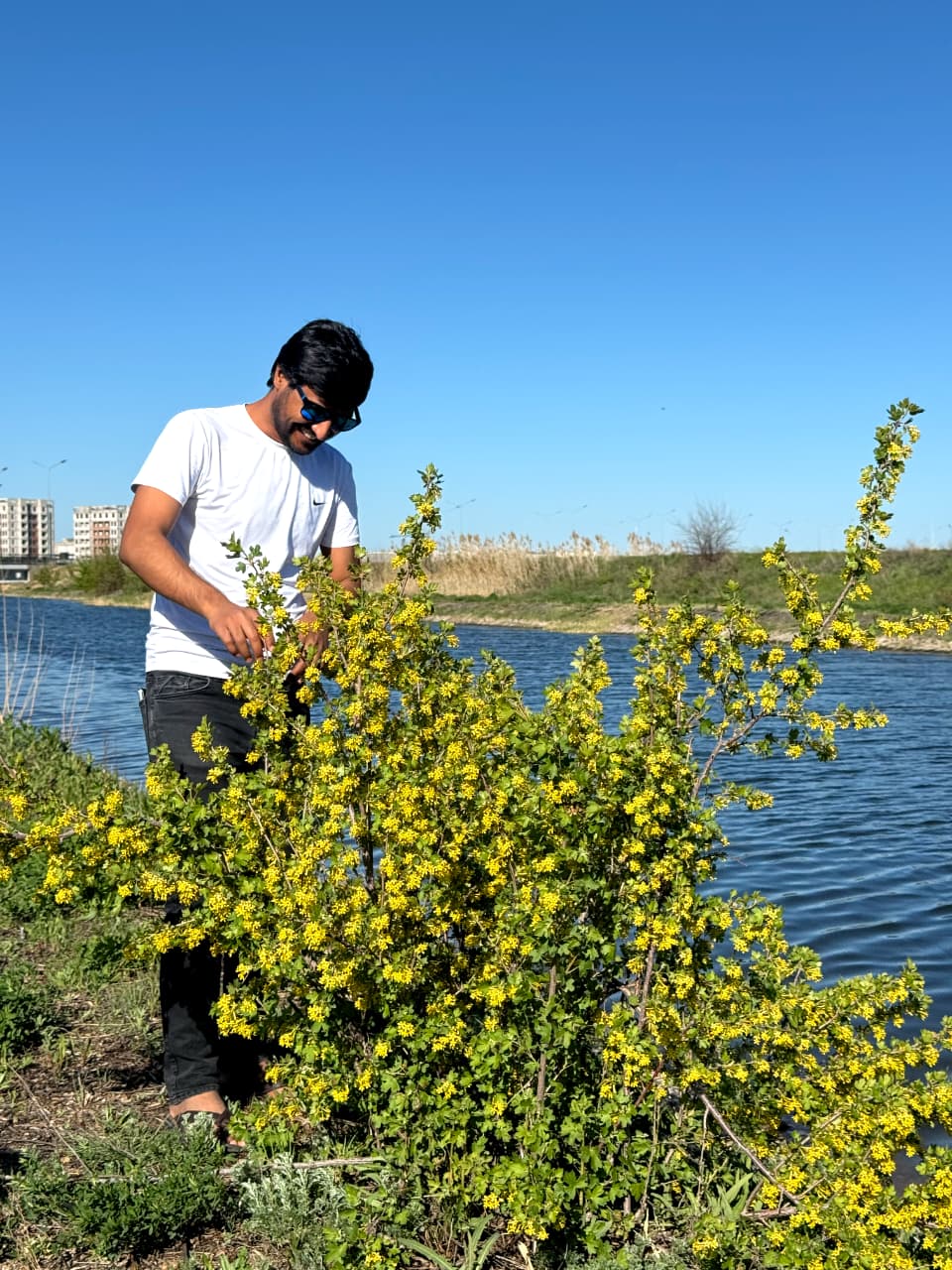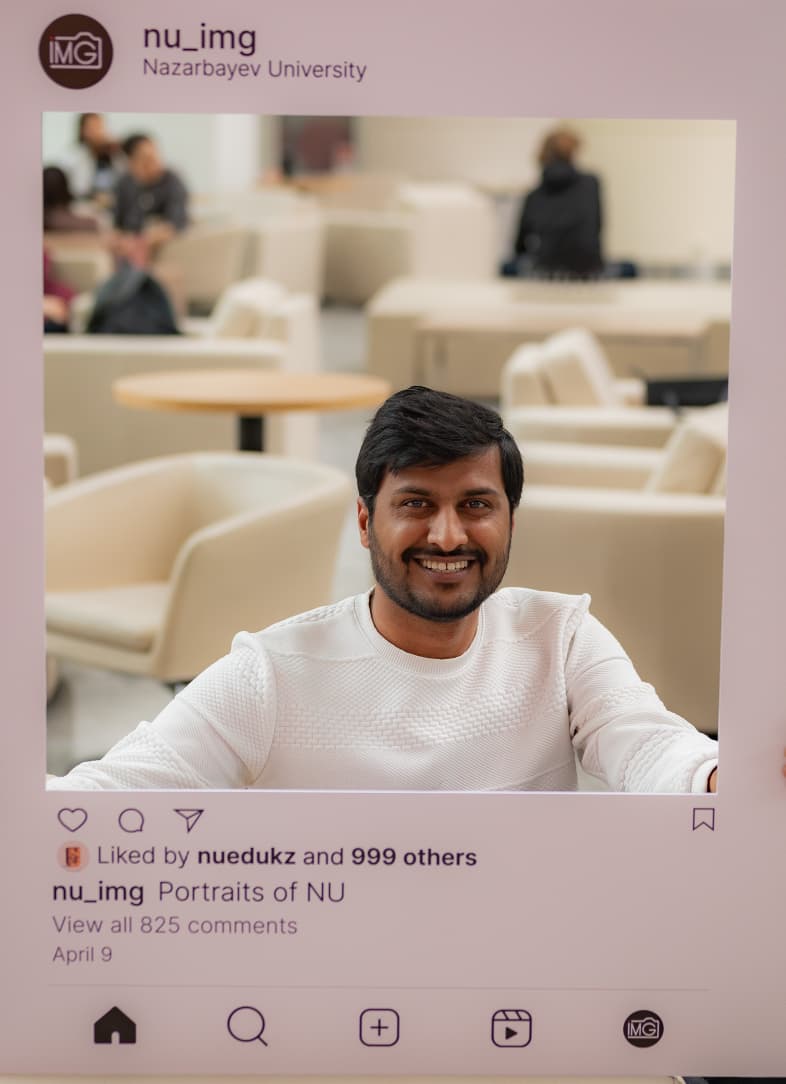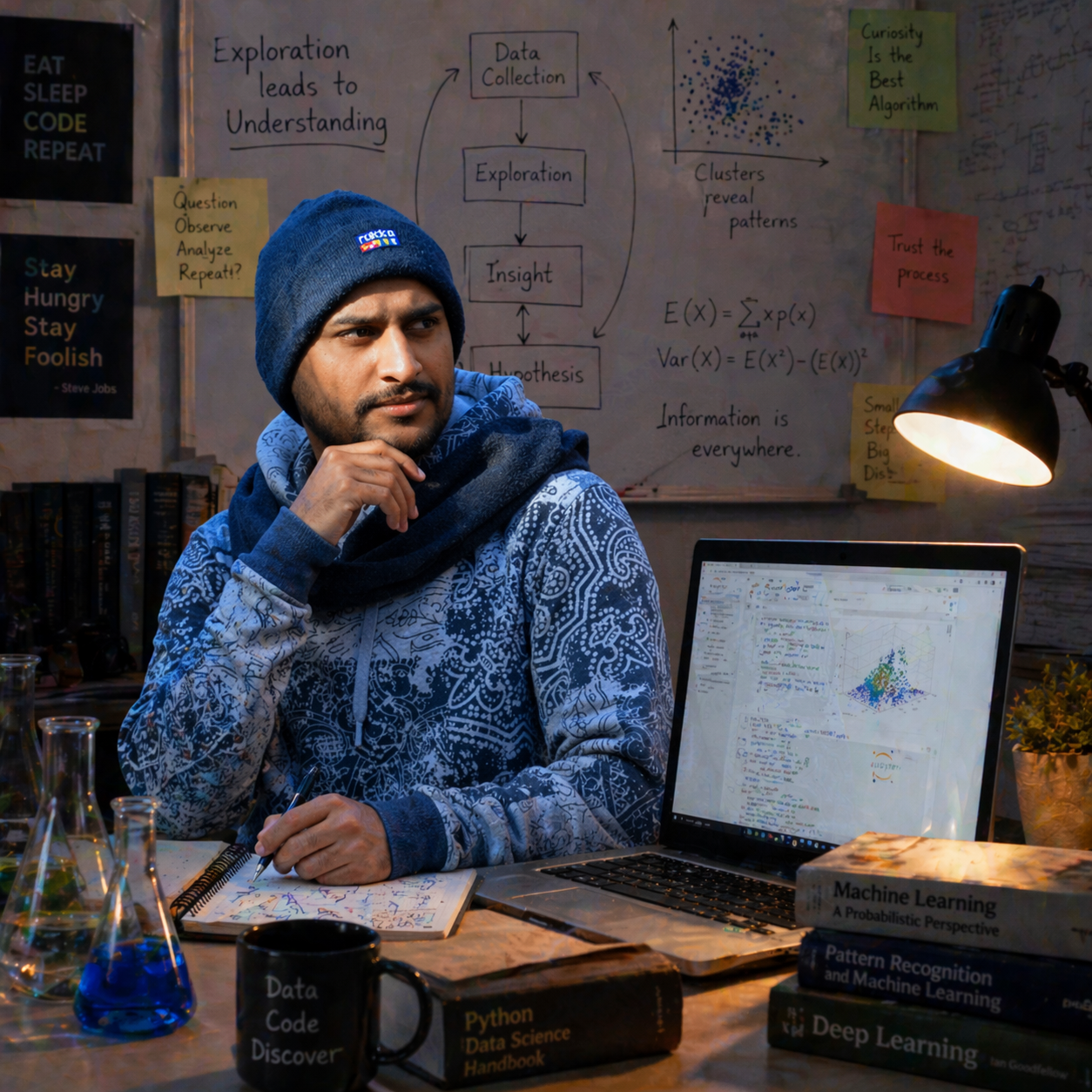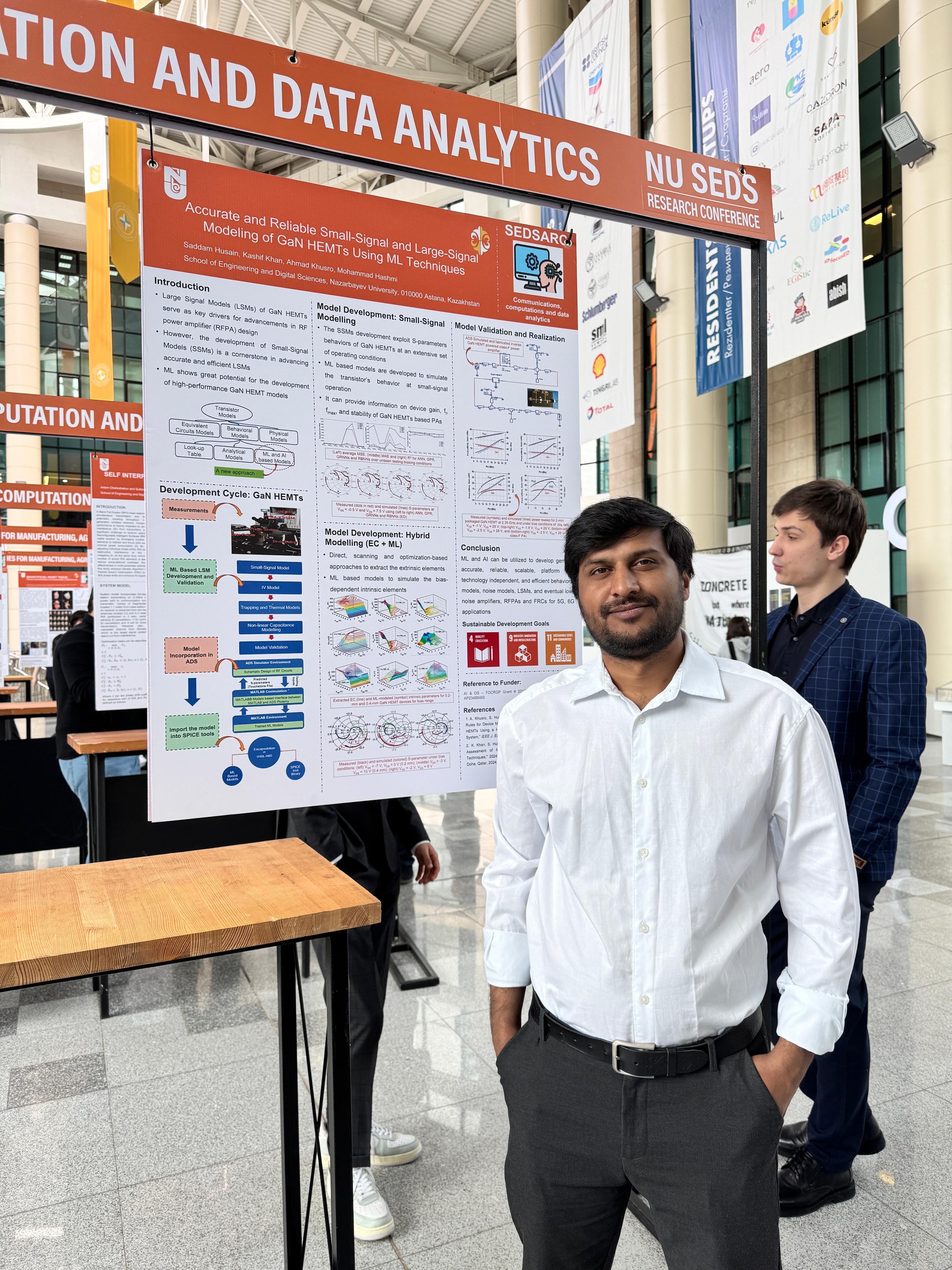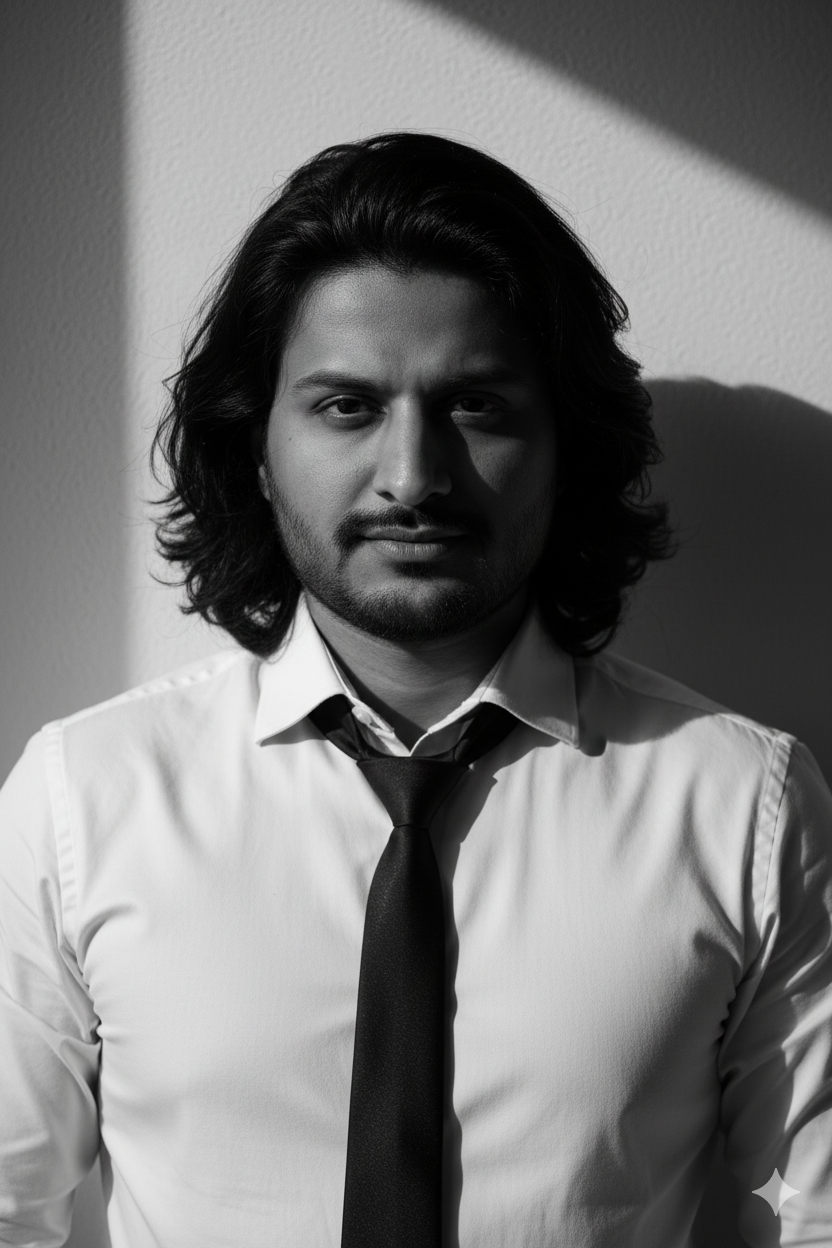
Portrait of Kashif Khan

Junior Researcher · PhD Student · Pilsen, Czech Republic

Kashif Khan

Faculty of Electrical Engineering, University of West Bohemia (UWB / ZČU)

I develop data-efficient and dependable machine-learning methods for engineering systems. My doctoral research focuses on AI-assisted optimization of machine design with the goal of reducing expensive numerical simulations, building on my work in RF and microwave modelling, renewable energy, prognostics, and time-series analysis.

Current role

Junior Researcher

Doctoral study

PhD Student at UWB

Research focus

AI for Engineering Design

01

7+ Peer-Reviewed Papers

Journals & IEEE Conferences

02

2 Best Paper Awards

IEEE Conferences

03

Research Across Europe & Asia

UWB · Nazarbayev University

About

I am a Junior Researcher and PhD student at the University of West Bohemia (UWB / ZČU) in Pilsen, Czech Republic. My current work explores how machine learning can make engineering design and optimization more data-efficient, particularly when high-fidelity numerical simulations are computationally expensive.

My research foundation combines machine learning, signal modelling, optimization, and data-driven system design. Across RF device modelling, renewable-energy systems, prognostics, and time-series analysis, I emphasize robustness, interpretability, reproducible evaluation, and practical deployment constraints.

Before joining UWB, I worked with the RF research team at Nazarbayev University, where I developed ML-based behavioural models for GaN HEMTs and surrogate-assisted workflows for high-frequency filter design. This work led to peer-reviewed journal and IEEE conference publications, including two Best Paper Awards.

I enjoy interdisciplinary collaboration where machine learning connects theory, experimental data, and physical systems. My doctoral work continues this direction by developing reliable AI methods that reduce computational effort while preserving engineering accuracy.

Fit a line (drag the points)

Move the points and see the least-squares line update live. This demos how models fit data and how outliers affect slope/intercept and R².

Slope (m):
Intercept (b):
R²:
Points:
Tip: drag points; double-tap/click to delete.

Selected Projects

Browse all repositories →

ML-Assisted Global MPPT under Partial Shading

Developed a reproducible, ML-assisted global MPPT framework for photovoltaic systems operating under partial shading, where the power–voltage characteristic exhibits multiple local optima. A physics-based single-diode PV model with bypass diode activation was used to generate large-scale synthetic data spanning wide irradiance and temperature variations. Multiple regressors (ANN, RF, SVR, GPR, XGBoost, LightGBM, CatBoost) were benchmarked using a scale-invariant target formulation to improve generalization across operating conditions.

The ML-predicted operating point initializes a lightweight, deterministic micro-refinement stage integrated with a boost converter, ensuring convergence to the true GMPP. Extensive dynamic PSC simulations demonstrate >99.95% tracking factor with sub-millisecond inference latency, validated through tracking efficiency, latency analysis, and Wilcoxon significance tests—highlighting suitability for real-time embedded deployment.

Physics-Guided ML Synthetic Data Generation Scale-Invariant Targets ANN / GPR / XGBoost / LightGBM Hybrid ML + Deterministic Control Real-Time Feasibility Statistical Validation

Remaining Useful Life (RUL) — NASA C-MAPSS

Developed Transformer+, a lightweight and regime-aware Transformer architecture for turbofan RUL prediction. The model combines local convolutional feature extraction with sensor-wise attention and operating-regime embeddings to handle non-stationary degradation under limited data. Evaluation followed a strict leakage-proof protocol using sliding-window sequences, train-only normalization, and GroupKFold cross-validation at the engine level.

Highlights (cap=100): RMSE of 10.62, 9.35, 7.65, and 10.89 on FD001–FD004, respectively; compact design with ~65K–383K parameters, sub-millisecond inference (≈0.05–0.3 ms), and calibrated uncertainty via Monte Carlo dropout and conformal prediction.

Lightweight Transformers TensorFlow (GPU, AMP) Regime-Aware Modeling GroupKFold (Unit-Level) Uncertainty Quantification Model Efficiency Time-Series PHM

Extrapolation-Aware ML Based Behavioral Modeling for Advanced RF Devices (GaN HEMTs)

Built small-signal S-parameter models for a GaN HEMT across wide conditions such as bias conditions, frequencies and temperatures using XGBoost and Grey Wolf Optimizer (GWO) for hyperparameter search. Ran controlled splits to evaluate interpolation vs. extrapolation along temperature, bias, and frequency. Results: temperature extrapolation was robust; frequency was intermediate; bias was most challenging. GWO-XGBoost consistently reduced MSE/MAE and improved R² over the default model. Validated with Smith charts and 3D response maps at representative bands.

XGBoost Grey Wolf Optimizer (GWO) Metaheuristic Tuning Interpolation & Extrapolation RF/mmWave Modeling S-parameters Smith Charts 3D Visualization Python NumPy/Pandas scikit-learn

ML-Assisted Microstrip Filter Design (GWO-ANN)

End-to-end EM → ML surrogate → metaheuristic optimization → fabrication pipeline in Advanced Design System (ADS). Designed and validated a high-frequency microstrip filter using an ANN surrogate and Grey Wolf Optimizer for rapid design-space exploration. Hardware verified with Vector Network Analyzer (VNA) measurements.

ADS ANN Surrogate Grey Wolf Optimizer EM Simulation VNA Validation Fabrication

Publications

Journal Article

GWO-ANN Based Approach for High-Frequency Microstrip Filter Design and Optimization

K. Khan, S. Husain, M. Hashmi. Procedia Computer Science (Elsevier, Scopus Indexed).

Journal Article

Hybrid Approach for Performance Optimization of Gallium Nitride High Electron Mobility Transistors Small-Signal Behavioral Models

K. Khan, S. Husain, A. Jarndal, M. Hashmi. International Journal of Numerical Modelling (Wiley, Scopus and SCIE Indexed).

Journal Article

Machine Learning Assisted Maximum Power Point Tracking With Deterministic Micro-Refinement Under Partial Shading Conditions

K. Khan, et al. IEEE Open Journal of the Industrial Electronics Society (Under Review; IEEE; SCIE/Scopus).

Conference Paper

Development and Assessment of ML Based GaN HEMTs Small-Signal Modelling Techniques

K. Khan, S. Husain, A. Jarndal, M. Hashmi. IEEE ICM, Doha, Qatar, Dec. 2024.

Conference Paper

Development and Evaluation of ANN, RBNNs, and GRNNs Based Small-Signal Behavioral Models for GaN HEMT Up to 40 GHz

K. Khan, S. Husain, G. Nauryzbayev, M. Hashmi. IEEE MWSCAS, Springfield, USA, Aug. 2024.

Conference Paper

Development and Evaluation of ANN, ACOR-ANN, ALO-ANN Based Small-Signal Behavioral Models for GaN-on-Si HEMT

K. Khan, S. Husain, G. Nauryzbayev, M. Hashmi. IEEE ICECS, Istanbul, Turkiye, Dec. 2023.

Conference Paper (Best Paper Award)

On Temperature-Dependent Small-Signal Behavioral Modelling of GaN HEMT Using GWO-PSO and WOA

K. Khan, S. Husain, G. Nauryzbayev, M. Hashmi. IEEE ISNCC, Doha, Qatar, Oct. 2023.

Conference Paper (Best Paper Award)

Temperature Dependent I-V Models for Microwave Transistor Using Radial Basis NNs, Generalized Regression NNs and Feedforward NN

S. Husain, K. Khan, Anwar Jarndal, G. Nauryzbayev, M. Hashmi. IEEE IMPACT, Aligarh, India, Nov. 2022.

Full publications list on Google Scholar →

Experience

Current appointment

Junior Researcher & PhD Student — University of West Bohemia (UWB / ZČU)

Faculty of Electrical Engineering · Pilsen, Czech Republic

2026 – Present
  • Researching AI-assisted optimization for machine design, with emphasis on reducing the number and cost of high-fidelity numerical simulations.
  • Developing data-efficient surrogate-modelling and optimization workflows that connect machine learning with physics-based engineering analysis.
  • Pursuing doctoral research within an interdisciplinary environment spanning artificial intelligence, industrial informatics, and electrical engineering.

Research Assistant — Nazarbayev University (RF Research Team)

Nov 2021 – Jun 2026
  • ML-Assisted Microstrip Filter Design (ADS): Built an EM → ML-surrogate → optimization pipeline; integrated Advanced Design System (ADS) data with ML surrogates and metaheuristic search (e.g., Grey Wolf Optimizer) to reduce design time while maintaining accuracy; validated via fabrication and Vector Network Analyzer (VNA) mea- surements.
  • Behavioral Modeling of Advanced RF Devices (GaN HEMTs): Benchmarked NNs/XGBoost/GPR for small-signal modeling up to 40 GHz (ongoing to 120 GHz); used global optimization for hyperparameter search; assessed interpolation vs. extrapolation across temperature, bias, and frequency; validated with Smith charts and response maps.
  • Research Process: Curated large datasets; enforced leakage-proof evaluation; emphasized reproducibility (clear splits, ablations, reporting); co-authored IEEE publications and contributed to multi-institutional projects.

Instructor — Invest In Kids, Astana

Feb 2023 – Present
  • Designed and delivered practical Python, Machine Learning, and AI Agent Automation (n8n + LLMs) curricula.
  • Built hands-on projects including Telegram AI chatbots, Google Sheets–connected agents, and LLMs-powered workflows.
  • Simplified complex topics—neural networks, model tuning (Grid Search/Random Search), and agent orchestration—into beginner-friendly modules.
  • Mentored students through real automation systems: IELTS Speaking Coach (voice + scoring), daily performance trackers, personal assistant, and data-entry agents.
  • Encouraged collaboration with coding challenges, peer reviews, and group projects; promoted project-based learning and iteration.
  • Focused on modern AI toolchains and no-code + code hybrids to solve real problems and build portfolio-ready work.

PASBAN Human Rights, Protection & Welfare Organization — General Secretary

2016 – 2021
  • Coordinated meetings and operations; ensured compliance and stakeholder communication.
  • Maintained records and administrative workflows improving organizational efficiency.

Education

Current studies

Doctoral Studies — University of West Bohemia (UWB / ZČU)

Faculty of Electrical Engineering, Pilsen, Czech Republic — 2026 – Present

  • Research focus: AI-assisted optimization of machine design with fewer numerical simulations.

MSc, Electrical & Computer Engineering

Nazarbayev University, Astana — Aug 2021 – Jun 2023

  • Thesis: Development of ML-Based Modelling Techniques for Advanced RF Devices.
  • CGPA: 3.21 / 4.0.

BSc, Electrical Engineering

University of Engineering and Technology (UET) Peshawar, Pakistan — Aug 2015 – Aug 2019

  • Thesis: Road Power Generation using Freewheel Mechanism.
  • CGPA: 3.36 / 4.0.

Technical Strengths

Machine Learning & AI

Supervised learning for regression and sequence modeling; surrogate modeling for expensive physical simulations; physics-guided and hybrid ML pipelines; generalization analysis (interpolation vs. extrapolation); uncertainty-aware modeling (GPR, Monte Carlo dropout, conformal prediction).

Models & Architectures

Neural Networks (MLP, CNN-based feature extractors); lightweight and regime-aware Transformer architectures for time series; tree-based ensembles (XGBoost, LightGBM, Random Forest); kernel methods (SVR, Gaussian Process Regression).

Optimization & Evaluation

Hyperparameter optimization (GWO, PSO, grid/random search); metaheuristic optimization for design-space exploration; leakage-proof data splitting; ablation studies and statistical validation (Wilcoxon tests); latency-aware evaluation for real-time and edge deployment.

Programming & Tooling

Python (scikit-learn, PyTorch, TensorFlow/Keras, NumPy, Pandas); GPU-accelerated training (AMP, mixed precision); experimentation and reproducibility (Jupyter, Spyder); system and physical modeling with MATLAB/Python; EM and circuit simulation using ADS.

Awards & Achievements

  • Best Paper Award — ISNCC, Doha (2023).
  • Best Paper Award — IMPACT, India (2022).
  • Fully Funded Scholarship — Abay Kunanbayev (MSc, Nazarbayev University).
  • Fully Funded Scholarship — Diya Pakistan (BSc, UET Peshawar).
  • Prime Minister’s Laptop Award — Academic excellence (BSc).
  • Goodwill Scholarship — Peshawar Model Degree College.

Online Courses

Languages

  • English — IELTS 7.0 (CEFR C1), proficient in academic & research communication.
  • Pashto — Native; Urdu — Native/Fluent

Contact

Open to research collaboration in machine learning, optimization, RF systems, prognostics, and AI-assisted engineering design.

UWB email: kashif12@fel.zcu.cz

Scholar: Google Scholar

LinkedIn: kashifkhan8145

GitHub: kashifkhan8145